
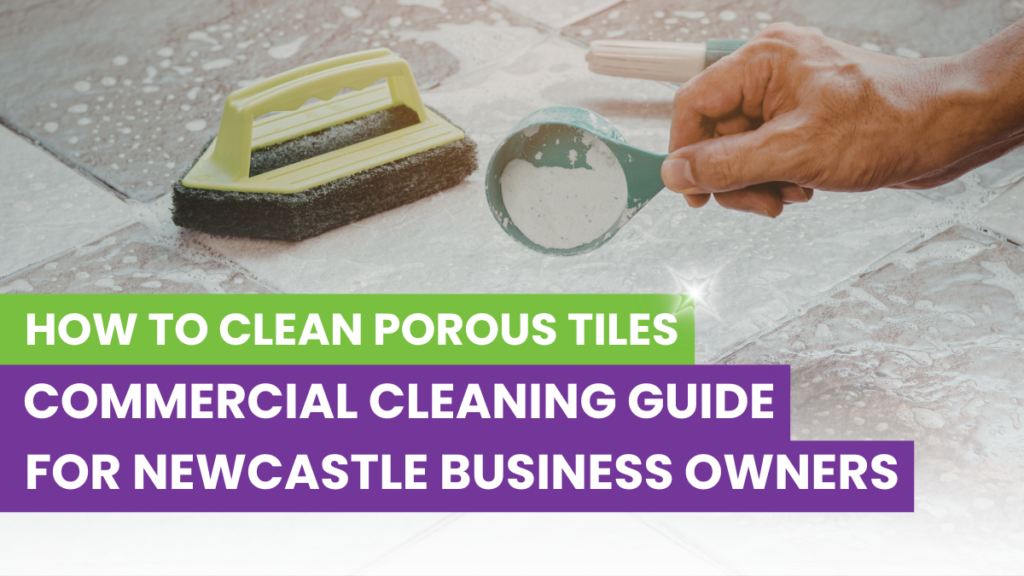
Clean floors influence how people judge your space. Walk into any commercial property in Newcastle and the condition of the flooring sets the tone straight away. When porous tiles look stained or uneven, it affects how customers, tenants, and staff feel about the environment. If you searched “how to clean porous tiles?” and reading this, you’re about to know the answer to your question!
Porous tiles need a different approach. They absorb dirt, moisture, and oils instead of keeping everything on the surface. That’s why many Newcastle business owners find that regular cleaning stops working after a while.
At Lifestyle Cleaning Services, we regularly clean porous tiles across offices, strata buildings, and commercial facilities in Newcastle and surrounding areas. The same issues come up again and again. This guide walks you through what actually works and what to avoid.
What Are Porous Tiles?
Porous tiles have tiny openings across their surface that absorb liquids and fine particles. These pores may not be visible, but they affect how the tile responds to everyday use. Over time, dirt and moisture settle beneath the surface.
You’ll often see porous tiles in Newcastle commercial spaces because of their natural look. Materials like marble, limestone, travertine, unglazed ceramic, and terracotta are common in shared areas. They create a more premium and textured finish.
That finish comes with added responsibility. Spills don’t sit on top. They soak in. Dirt builds up gradually and becomes harder to remove without the right method.
Why Porous Tiles Are Harder to Clean in Commercial Settings
Porous tiles hold onto what they absorb. In high-traffic Newcastle environments, this becomes more noticeable over time. Every step presses dust, oils, and moisture deeper into the tile.
Daily operations add another layer. Coffee spills, cleaning residue, and tracked-in dirt all contribute to buildup. Even well-meaning cleaning routines can make things worse if the wrong products are used.
This is when tiles start to look inconsistent. Some areas darken. Others fade. At this point, surface cleaning is no longer enough.
Common Problems with Porous Tiles in Newcastle Businesses
Porous tiles in commercial spaces show wear quickly. These issues often develop slowly, which makes them easy to overlook until they affect the whole area. Once visible, they tend to spread.
Stains That Stay
Spills in busy environments are not always cleaned immediately. This allows stains to absorb into the tile. Over time, these marks become harder to remove.
Dark Grout Lines
Grout collects dirt faster than tiles. In Newcastle properties with heavy foot traffic, grout lines can become uneven and discoloured. This affects the overall appearance of the floor.
Dull and Patchy Finish
Tiles lose their original look as residue builds up. Some sections appear darker while others look faded. This creates an uneven finish across the space.
Slippery or Sticky Surfaces
Improper cleaning can leave behind residue. This affects safety and attracts more dirt. It also makes the floor feel inconsistent underfoot.
Mould and Odour
Moisture trapped in porous tiles can lead to mould growth. This is common in restrooms and entry areas. It can impact hygiene and air quality.
Real Example: Porous Tile Cleaning in a Commercial Bathroom
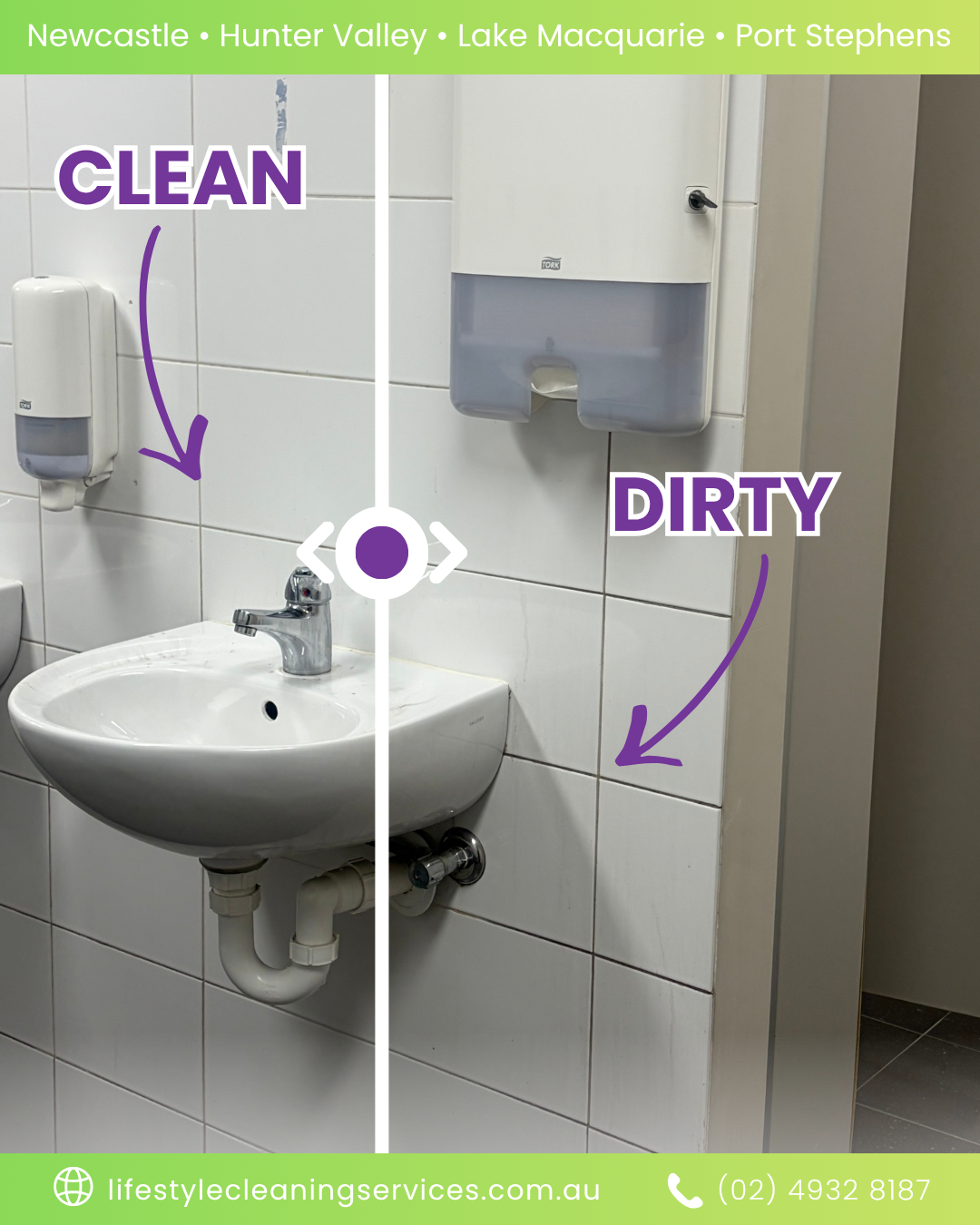
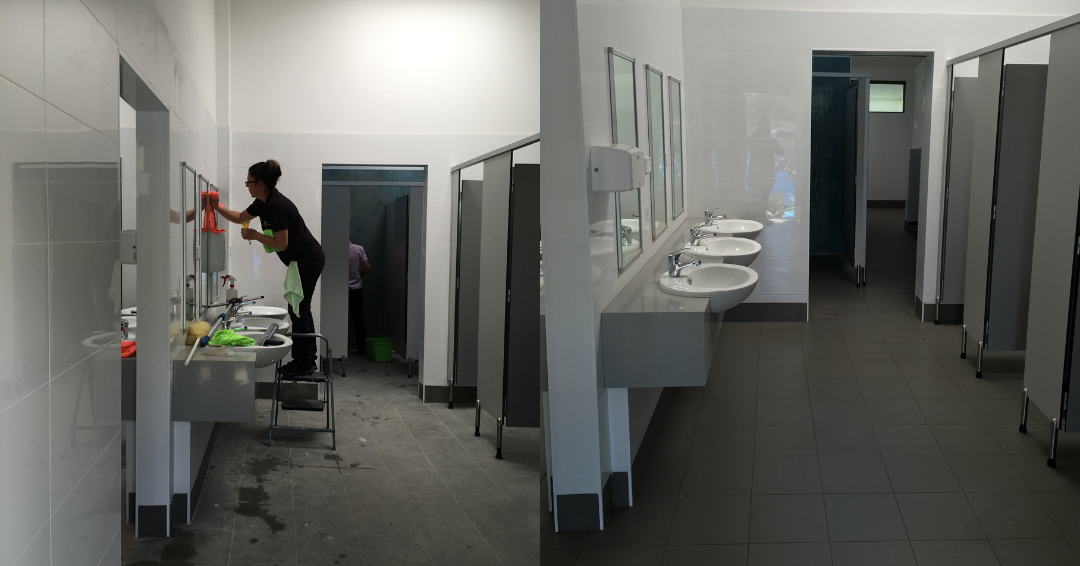
This is a common situation we handle in Newcastle commercial spaces. Bathroom tiles often show uneven staining due to constant moisture and use. Regular cleaning helps, but it doesn’t always reach what’s trapped inside the surface.
A proper deep clean restores consistency across the tiles and grout. It also improves hygiene and reduces odour issues. This is where professional equipment makes a clear difference.
How to Clean Porous Tiles Properly
Cleaning porous tiles in commercial spaces requires a structured approach. Each step removes a different layer of dirt. Skipping steps usually leads to uneven results.
Start with Dry Cleaning
Remove loose dirt using a broom or vacuum. This prevents debris from being pushed deeper during wet cleaning. It also improves the overall outcome.
Use the Right Cleaner
Choose a pH-neutral cleaner made for porous tiles. These products clean effectively without damaging the surface. Harsh chemicals increase absorption over time.
Scrub Key Areas
Focus on grout lines and visible stains. Use a soft or medium brush for smaller areas. For larger Newcastle properties, rotary machines deliver more consistent results.
Deep Clean with Steam
Steam helps break down embedded grime and grease. It also sanitises surfaces without harsh chemicals. This is useful for high-use commercial areas.
Rinse Thoroughly
Always rinse with clean water. Residue left behind can dull the surface and attract more dirt. Proper rinsing improves the final finish.
Dry the Surface
Drying prevents moisture from being reabsorbed. This helps maintain a more even appearance and reduces mould risk. It also improves safety.
Apply a Sealer
Sealing creates a protective layer. It reduces absorption and makes future cleaning easier. For Newcastle businesses, this step helps reduce long-term maintenance.
How to Get Stains Out of Porous Tiles
Stains in porous tiles require the right approach. Acting early improves your chances of full removal. In busy environments, delays are common, which makes proper treatment more important.
Here’s what works:
- Use a baking soda paste for light stains
- Apply the paste directly to the affected area
- Let it sit for a few minutes to lift the stain
- Gently scrub using a soft brush
- Rinse thoroughly to remove residue
- Use a tile-safe cleaner for oil or heavy stains
- Allow the cleaner to sit longer so it can penetrate the surface
- Repeat the process if the stain does not fully lift
Some stains require multiple treatments. For larger commercial areas, professional cleaning often delivers faster and more consistent results.
How to Clean Porous Tiles in Newcastle Properties
Maintenance is what keeps porous tiles manageable. High-traffic Newcastle spaces need a consistent routine to prevent buildup. Small actions done regularly reduce the need for deep cleaning.
Focus on these:
- Sweep or vacuum daily in high-traffic areas
- Mop weekly using a pH-neutral cleaner
- Clean spills immediately to prevent absorption
- Avoid excessive water during cleaning
- Use entry mats to reduce dirt from outside
- Reseal tiles every 6 to 12 months
- Inspect and clean grout lines regularly
Consistency keeps your flooring looking even and easier to maintain.
How to Make Porous Tile Shiny
Porous tiles don’t stay shiny on their own. Their appearance depends on how clean the surface is. Removing buildup restores their natural finish.
Follow these steps:
- Start with a deep clean to remove embedded dirt
- Use a polish designed for porous tiles
- Apply evenly across the surface
- Buff lightly if needed
- Apply a quality sealer for protection
- Avoid wax-based products that cause buildup
A clean and sealed surface reflects light better. This creates a more polished look without overloading the tile.
Why Hire Professional Commercial Cleaners in Newcastle
Routine cleaning has limits. Some buildups require specialised equipment and experience. This is where professional cleaning becomes valuable.
At Lifestyle Cleaning Services, we have handled porous tile cleaning across Newcastle, Hunter Valley, Lake Macquarie, and Port Stephens since 2011. We work with offices, strata properties, and commercial facilities that deal with daily foot traffic.
Here’s what professional services offer:
- Industrial-grade equipment for deep cleaning
- Correct solutions matched to tile type
- Efficient service for large commercial areas
- Consistent results across the entire floor
This helps maintain a cleaner and more professional environment. It also reduces ongoing maintenance effort.
Conclusion
Porous tiles require a more thoughtful cleaning approach, especially in commercial settings. Once you understand how they absorb dirt and moisture, managing them becomes more straightforward. The focus should always be on both surface cleaning and deeper maintenance.
For Newcastle business owners, consistency makes the biggest difference. Regular care prevents buildup and keeps floors looking even across all areas. Using the right methods also protects your flooring over time.
If your tiles still look worn after regular cleaning, it may be time for a deeper solution. Lifestyle Cleaning Services provides professional porous tile cleaning across Newcastle and the surrounding areas.
Call (02) 4932 8187 to discuss your commercial cleaning needs and get tailored support for your property.
FAQ
What is the best mop for porous tiles?
Microfibre mops are a reliable option for porous tiles. They pick up fine dirt without pushing it deeper into the surface. This helps maintain a cleaner result over time.
What is the best cleaner for porous surfaces?
A pH-neutral cleaner designed for porous or natural stone tiles works best. It removes dirt without damaging the material. This helps maintain the tile’s condition.
How to get stains out of porous tiles?
Light stains can be treated using a baking soda paste. Deeper stains may require specialised cleaners and repeated treatment. Acting early improves results.
Does vinegar damage tile or grout?
Vinegar is acidic and can weaken grout over time. It may also damage natural stone surfaces. Regular use is not recommended.
How to clean porous tiles and make it shiny?
A deep clean removes buildup that causes dullness. Polishing with a tile-safe product improves appearance. Applying a sealer helps maintain that finish.